Residential Epoxy Flooring Chicago: Basements, Garages & Rec Rooms
Basement epoxy floors, garages and rec rooms across Chicago and the suburbs, coated in flake, metallic or solid color over a slab that was tested and repaired first.
Chicago Homes, Old and New
Chicago is an old city under the floorboards: the median home was built in 1953, nearly four in ten housing units predate 1940, and more than 80,000 brick bungalows and 76,000 two-flats stand over full basements, most of them built from 1910 to the mid-1930s. The suburbs are a generation or two younger, with median build years of 1972 in Addison, 1974 in Arlington Heights, 1979 in Schaumburg, 1983 in Lisle and 1990 in Naperville.
The concrete shows that spread. Under a bungalow the basement slab tends to carry hairline cracks, old patches and often a coat of paint, all of which gets repaired and ground away before color goes on. A suburban slab poured 30 to 50 years ago is mostly sound and needs little more than its surface opened and sealed. Whichever it is, the build is the same: an epoxy base under a clear topcoat, with flake for a storage room full of boxes and boots, metallic for a rec room or family room and a solid color for a home gym or laundry. Stairs and entries can take a slip-resistant additive.
Every basement slab is tested for moisture before you get a quote. The city sits on dense glacial clay that holds water, most sewers here carry rainwater and sewage in the same pipes, and after storms like July 2, 2023, when 3.35 inches fell at O'Hare, Chicagoans filed more than 12,000 basement-flooding reports in two weeks. So the order is fixed: fix the drainage first, test the slab, then coat. A floor coating does not keep water out; what it gives you is a sealed, bright floor that is far easier to keep clean.
In the garage, road salt rides in on the tires through about 121 freezing nights a year, so every garage floor is diamond ground and finished under a protective topcoat. A patio can sometimes be coated too; ask at the estimate. To see what moves the price by room and finish, read our Chicago cost guide, or find out why so many garage coatings peel at the door first.
Get a Free Quote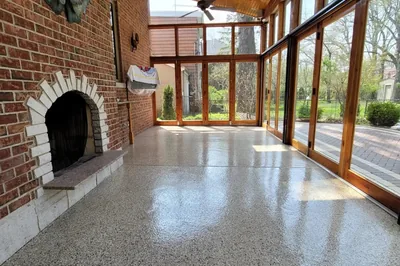
Why Chicago Homeowners Coat Their Floors
Salt slush, century-old basements, summer storms and everyday spills: six things a sealed floor takes care of.
Salt
Keeps Road Salt on Top
Between 2009 and 2014 Chicago averaged about 215,000 tons of road salt a year, and all of it rides home on the tires. A sealed floor holds that slush on top, where one pass of a squeegee sends it back out the door.
Winter
Through the Freeze Season
An unheated garage stews in salty meltwater from the first freeze near October 28 until the last near April 16. A sealed slab never lets that water into the concrete, and scaling cannot start where water cannot get in.
Basement
A Basement Floor You Can Mop
A bungalow basement slab sheds dust and drinks up every spill. Coated, it becomes one seamless surface to sweep and mop, no grout lines, laid over concrete that was tested for moisture first.
Spills
Chemical & Stain Resistant
Spilled paint, a knocked-over oil jug, muddy paws after an April downpour: an epoxy floor lets you wipe them up instead of watching them soak in.
Rooms
More Than the Garage
Rec room, laundry, storage room, basement family room: any of them can be coated, either to match the garage or to give the lower level a look of its own.
See what sets the price →Old slabs
Bungalows and Two-Flats
A basement poured in 1925 is still a good candidate. Cracks and old patches are repaired, the surface is ground and the slab is tested before any color goes down, so the coating bonds to sound concrete.
How a Home Floor Gets Done
Five steps, from a free look at your basement or garage slab to a floor the family can use.
Free Visit & Quote
The installer walks the basement or garage with you, looks at the slab's age, cracks, old paint and any past water, shows you flake, metallic and solid-color options and gives you a free, no-obligation quote. Schedule yours free.

Surface Preparation
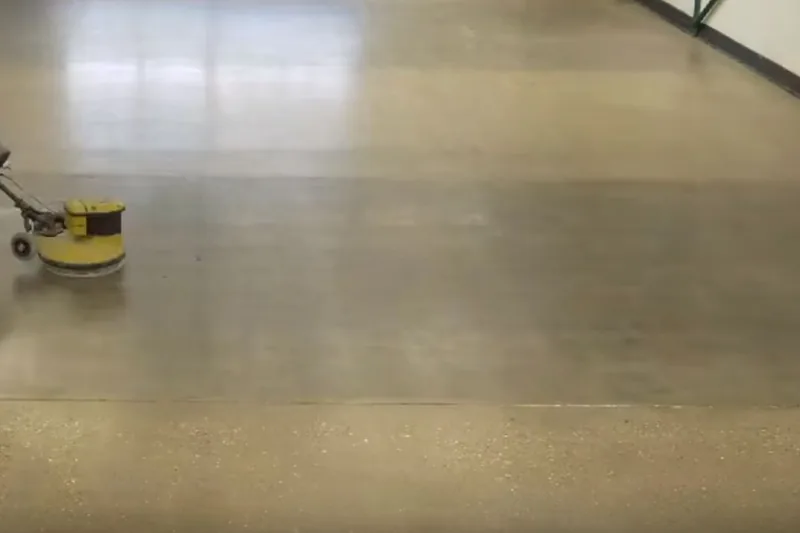
First comes a moisture test, because basement concrete sitting on wet clay often holds more water than it lets on. Then a diamond grinder takes off old paint, sealer and the weak top layer, leaving open concrete for the base coat to soak into.
Crack Repair
A hundred-year-old slab has collected cracks, chips and patches, and every one is filled and repaired ahead of the color coat. Any crack still on the move gets pointed out up front, since no coating hides it or holds a shifting slab in place.

Base Coat, Color & Topcoat
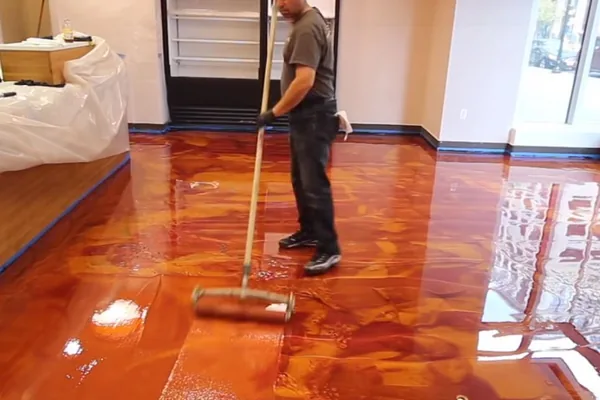
Then the layers: the base coat, the flake, metallic or solid color, and a clear topcoat in matte, semi-gloss or high-gloss. Each goes on inside the product's temperature range, which in a January basement or a muggy July garage is something the crew plans around.
Cure & Walkthrough
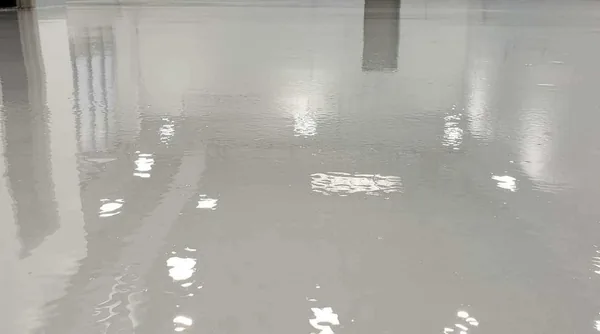
One to two days covers most garage floors, and your quote spells out the timing for yours. The walkthrough ends with the date the room can take furniture or a car and a few care tips, rinsing the winter salt film out of the garage among them.
Ready to Start? Step 1 Is Free.
Book a free, no-obligation visit and talk through finishes for your own space.
Floor Looks for Chicago Homes
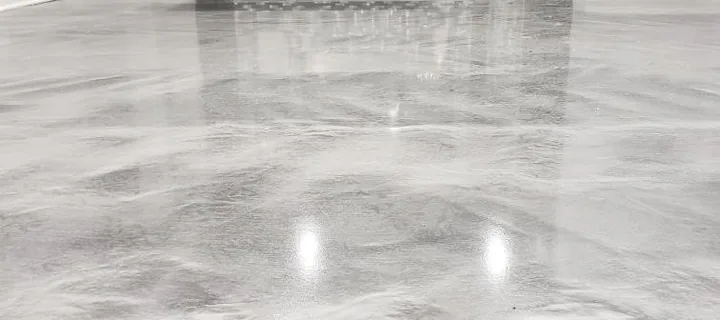
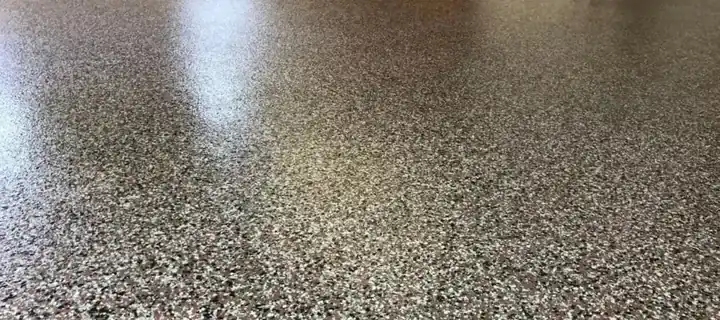
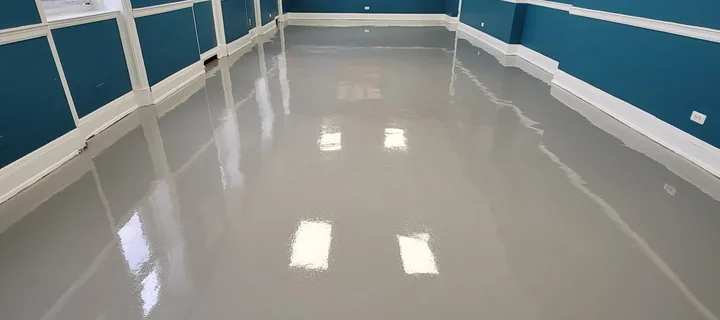
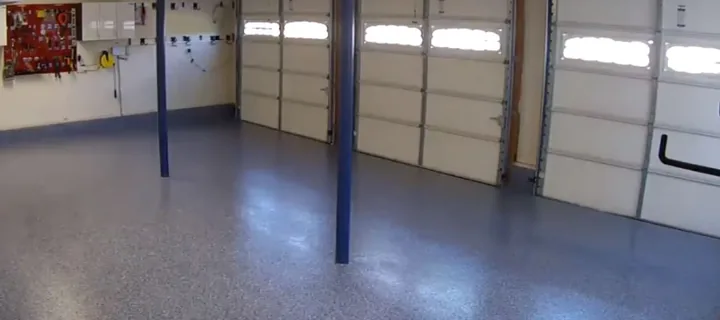
Three looks, each under a clear topcoat in matte, semi-gloss or high-gloss.

Home Floor Examples
Some finishes to spark ideas; bring photos of floors you like to the free estimate.


Home Floor Coating Questions
Answers for Chicago and suburban homeowners planning a basement or garage floor.
A home floor gets its number after a free visit, because room size, what shape the slab is in (cracks, old paint, moisture), the look and sheen you pick and how much grinding and repair it takes all change it. Call (773) 938-3823 and the installer comes out; nothing obliges you to go ahead.
Usually, yes. Salt and sun never reach a basement, which leaves moisture as the one real question, and in a city built on clay above combined sewers it deserves a real answer. Your slab gets a moisture test before any quote is written, and a damp reading comes with an explanation of what it means for the floor. What a coating delivers is a bright surface you can wash; what it cannot do is keep water out, so any drainage problem gets solved first.
Never straight over it. Tile and vinyl are pulled up, and paint, sealer or an old epoxy is ground away, so the new coating bonds to bare concrete and nothing else. Whatever removal your floor needs is spotted at the free visit and written into the quote. Call (773) 938-3823 and we set a time.
A ground, properly coated slab is meant to last; how long depends on prep, traffic and care — we'll tell you what we see on your slab. A rec room in the basement barely wears at all next to a garage that swallows salt slush from October to April. A dulled topcoat can usually be renewed with a new coat rather than a new floor.
Yes, provided the slab has dried right through and passed a moisture test. Water that is still coming in must be stopped at its source, since no coating keeps a basement dry. Heavy summer storms send sewer backups and seepage into Chicago basements, which is exactly why each basement slab is tested before a quote exists. Call (773) 938-3823 for a free look.
Design your residential epoxy floor.
Try finishes on a floor like yours and get a ballpark figure with your free-estimate request.
Open Floor Studio →