Epoxy Floor Repair Chicago: Coating Over a Failed Floor
A coating another contractor got wrong, peeling at the garage door, bubbling in the basement or worn thin in a shop: the old material comes off, the concrete is repaired and the floor is recoated.
Why Floor Coatings Fail in Chicago
Read the failure and it tells you its own story. A strip lifting along the overhead door is brine from the apron creeping under the edge. Blisters across a basement floor are vapor pushing up from a damp slab. Bald patches under the tires are a coating that was too thin, or too soft, for hot rubber. Sheets that peel away whole mean nobody ground the concrete first, and on floors another contractor installed that is what we find most often.
Chicago tests all of them at once. Streets and Sanitation put down roughly 215,000 tons of salt a year between 2009 and 2014, the freeze season stretches from late October to mid-April, and de-icer keeps a concrete surface wet through refreeze after refreeze. Then there is the age of the housing: a median build year of 1953, with nearly four units in ten dating from before 1940, means no shortage of slabs that have been patched, painted over or coated once already.
Plain wear is the other half of the work: a worn track through a shop, grooves where pallet jacks pivot, a chunk missing where a toolbox landed. Putting a new coat over any of it without fixing what caused it just buys the same failure twice. Nor will a coating bridge a crack or pin down a slab that moves; heaving or settling concrete belongs to a concrete contractor, and you are told that before a quote is written.
That makes the first visit a diagnosis. Carlos reads where the coating let go, how it let go, and puts a moisture test on the slab. The repair follows from that: grind the failed coating off to sound concrete, rebuild the cracked and scaled spots, recoat in a finish that fits the room. One reviewer, Augusta J., described the job that brought her here: “I highly recommend this epoxy company. Very happy how they fixed our epoxy that unfortunately was not properly done by another contractor. Carlos and his team went above and beyond working on our project.”
Repairs We Handle
Garage aprons, wet basements, shop lanes and warehouse joints, plus floors another installer got wrong: the fix follows the failure and the room.
Apron
Garage Apron Repair
Nowhere on the floor takes more brine than the apron, so that is where coatings let go first. We grind the lifted edge back until the concrete is sound, rebuild any scaled spots and run the fresh coating all the way to the door line.
Why door edges fail →Basement
Basement Coating Repair
Blisters in a basement coating point to vapor pushing up through the slab, and after a July storm sometimes to a sewer backup. Off comes the failed layer, then the slab gets a moisture test before anything new is considered. Water still finding its way in means drainage first, because no floor coating keeps water out.
Business
Shop & Office Recoats
A worn track through a store or a scuffed lobby usually wants a fresh topcoat, not a new floor, and we book the work around when you are open.
Warehouse
Warehouse Spot Repair
One gouge or a broken joint edge is not a reason to redo the whole floor. The damaged spot on a warehouse or shop floor gets ground out and rebuilt while forklifts keep running everywhere else.
Care
Care in Salt Season
Through the winter, hose the white salt film off before it dries in, keep grit swept up so it cannot scratch, and park on mats that breathe instead of rubber-backed ones that hold water underneath.
Recoat first
Recoat Before You Tear Out
Tearing out and repouring a sound slab is almost never necessary. Most of the time the answer is to grind the old coating off and recoat, and that is the answer you get, even when the last crew said something else.
See what sets the price →Garage Apron Repair: Where Salt Does the Most Damage
The car drips its slush just inside the door and the puddle sits on the apron, so that strip drinks more brine than the rest of the floor combined; come March, the month of thaw and refreeze, that is where the scaling appears. Once the coating or the concrete there begins to chip, the apron alone can be repaired before the damage walks inward.
- Loose coating ground off, down to concrete that is still sound.
- Scaled or chipped concrete repaired before any coating goes back on.
- New coating carried out to the door line, where the brine sits longest.
- An honest call on whether fixing the apron is enough or the whole floor is due.
Five Steps to a Repair That Holds
Find the cause, grind off what failed, repair the concrete, recoat, then hand over care tips.
Free Assessment
The installer comes to your home or business, looks at where and how the coating let go, asks who installed it and how, and tells you what is likely behind it. Free, no obligation. Schedule yours free.
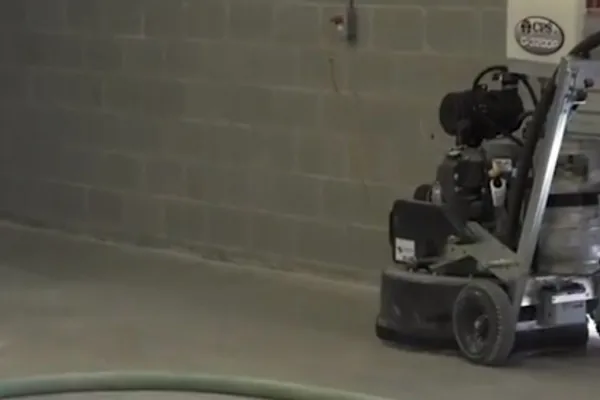
Diagnosis
A moisture test goes on the slab and the coating that remains gets pulled at to see how well it grips. Between them they tell apart vapor from below, grinding that was skipped and a product wrong for the room.
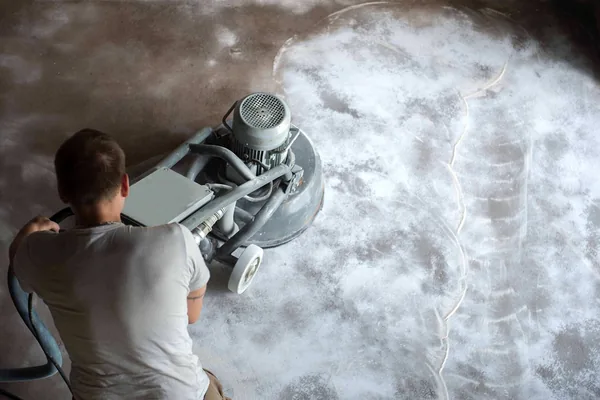
Surface Preparation
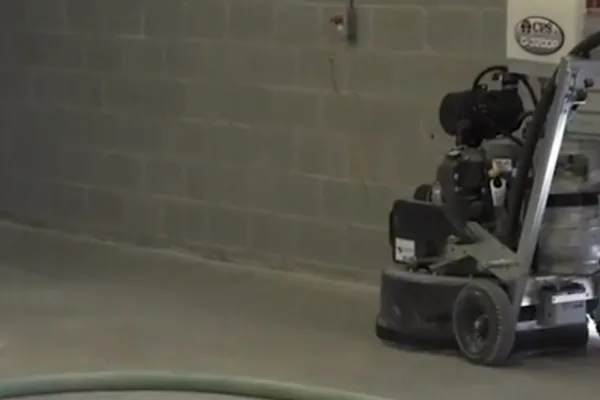
If the old coating is still sound, it is scuffed and recoated. If not, it comes off completely by diamond grinding, down to bare concrete.

Repair & Re-Coat
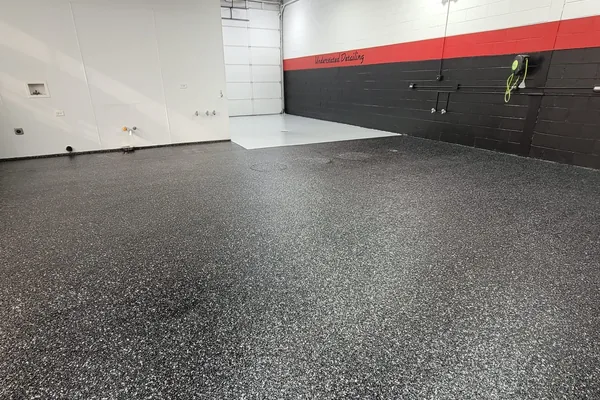
Cracked, scaled and damaged concrete gets rebuilt, and only then does the new finish go on: flake, metallic or a solid color at home, a solid commercial build where the room needs one.

Cure & Walkthrough
The cure is planned around the slab temperature and the product's instructions. At the walkthrough you get care tips for salt season so the new coating stays put.
Ready to Start? Step 1 Is Free.
Book a free assessment and find out what went wrong with your floor.
Same Look or a New One
A recoat is a good moment to change things: match what you had, or pick a new look and sheen.
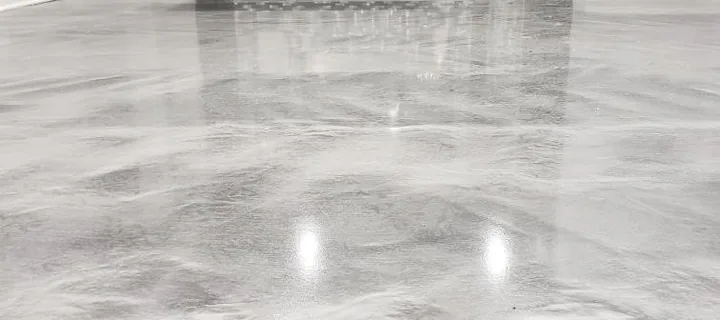
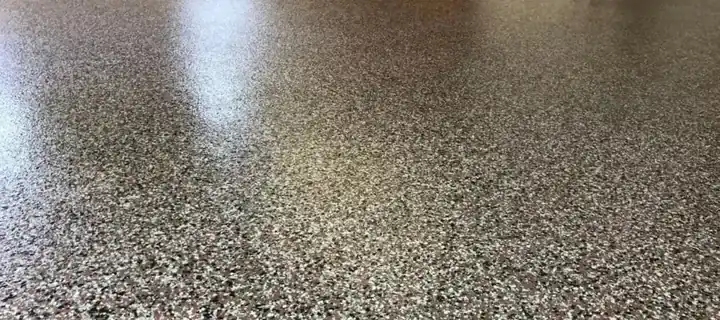
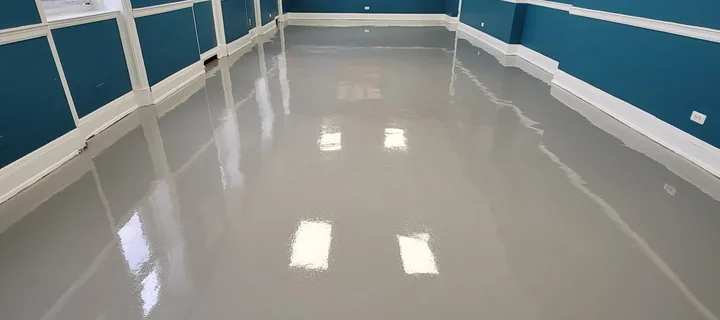

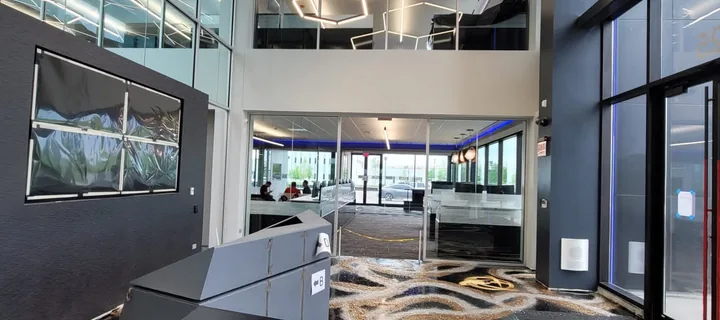
Before and After
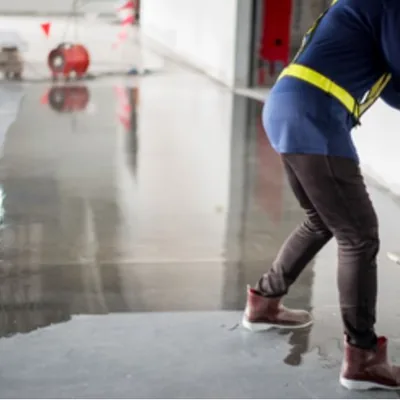
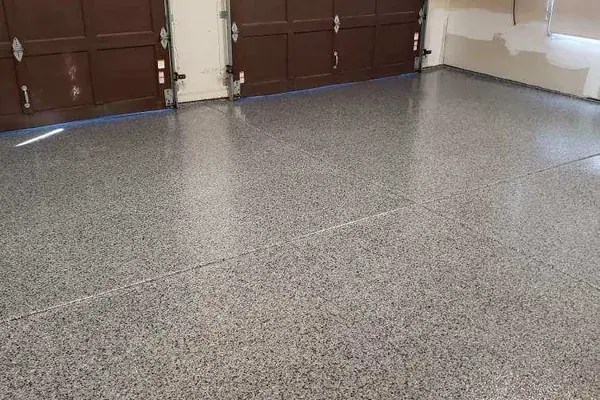
A worn slab, repaired and coated, as examples. Your own floor gets looked at during the free assessment.

Floor Repair Questions
Answers for Chicago-area homeowners and businesses with a coating that has let go.
Four culprits cover nearly every peeling floor in Chicago: vapor coming up through the slab, apron brine creeping under the coating at the door, a coating too thin or too soft for what drives on it, and concrete that was coated without being ground. Many floors have two of these, and a floor whose installer skipped the grinding nearly always has the last.
Because older slabs and basements that have flooded tend toward the moisture problem, a test on the slab comes before any repair is suggested.
When the old layer still grips the concrete, yes: it gets scuffed and a new coat goes over it. When it is lifting, oily or sitting on a damp slab, it has to be diamond ground off to bare concrete, otherwise the new coat follows it off the floor.
Both adhesion and moisture get checked on site before you hear which route fits.
It scales with how much of the floor has let go, how big the room is, whether the old coating must come off entirely and how much concrete repair sits underneath. Fixing an apron is a smaller job than recoating a whole garage, and recoating is usually smaller than starting a floor from bare concrete.
Looking at it costs nothing, and you have the quote in hand before any work begins. What sets the price of a brand-new floor is covered in our Chicago cost guide.
Often, but not always. The failed layer comes off first and the slab gets tested before any new product is considered. Water arriving through cracks, from the yard or from underneath, has to be stopped at its source, since no coating on earth seals a floor against it.
With Chicago basements sitting on water-holding clay above a sewer system that backs up in big storms, a basement floor that fails twice needs its drainage looked at before coat number three.
Keep grit swept and wash the floor often. In winter, hose the salt film off the garage floor before it dries in, and choose mats that breathe over rubber-backed ones that hold water. For a shop or office, a dust mop and a neutral cleaner carry most of the load.
When the topcoat starts going dull in the busiest lane, that is the moment to call: a fresh topcoat then beats a repair later.
Design your epoxy floor.
Try finishes on a floor like yours and get a ballpark figure with your free-estimate request.
Open Floor Studio →