Garage Floor Epoxy Chicago: Built for Salt Slush & Hot Tires
Garage floor epoxy contractors for Chicago and the suburbs: the slab is ground and repaired, then coated so winter salt slush and summer tire heat stay on the surface instead of in the concrete.
Want to talk to the installer? During business hours we can put you through on the same call.
What a Chicago Winter Does to a Bare Garage Slab
Chicago's garage season is a salt season. O'Hare drops to freezing or below on about 121 nights a year, the median first freeze lands around October 28 and the last around April 16, and in between the city spreads road salt by the hundreds of thousands of tons: about 215,000 tons a year on average across 2009–2014, by Streets and Sanitation's own figures. Your tires pick that brine up on the Kennedy, the Eisenhower or Route 59, and it melts off the car onto the garage floor.
Bare concrete drinks that salty meltwater in. When it refreezes overnight, the surface flakes away in thin layers, what concrete engineers call scaling, and the de-icers make it worse: they keep the surface saturated and add freeze–thaw cycles. The apron and the first few feet inside the door take the brunt, which is why a sealed surface there, where the slush can be squeegeed back out, makes the biggest difference.
Summer brings the opposite problem. O'Hare sees about 17 days a year at 90°F or hotter, and tires that come off a baked expressway can soften and lift a thin or poorly bonded coating where the car parks, which is why prep and film build matter more than the brand on the bucket. The slabs vary as much as the seasons: a detached alley garage behind a bungalow may sit on concrete nearly a century old and need crack repair first, while a 1970s two-car garage in Schaumburg or Arlington Heights mainly needs the surface opened up and sealed before another winter of salt reaches it.
Which is why a diamond grinder opens every garage slab before a drop of product touches it. Chips and cracks get filled, and any crack still on the move is shown to you first, since a coating neither hides one nor holds a slab still. After that the color goes on, flake, metallic or solid, sealed under a protective topcoat in matte, semi-gloss or high-gloss. The same crew handles basement and home floors; see our residential floors and repair and recoating pages, or read the Chicago cost guide for what moves the price.
Most garage floors are done in one to two days, and you get the schedule for your own slab with the free estimate.
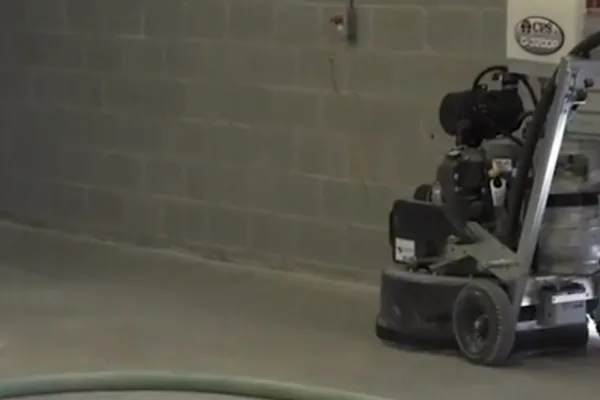 Before
 After
What an Epoxy Garage Floor Does for You
Six reasons Chicago homeowners coat the garage, from the first salt run to the last 90-degree day.
Hot tires
Hot-Tire Pickup Handled
About 17 days a year top 90°F at O'Hare, and hot tires can soften and lift a thin coating. Proper grinding and a full-build system keep the floor where it belongs; you pick the sheen.
Why coatings peel at the door →Sealed
Salt and Oil Stay on Top
Brine off the tires, a weeping oil pan, spilled washer fluid: a chemical- and stain-resistant floor holds them on top rather than in the concrete, and a mop lifts them off.
Grip
Grip When the Snow Melts
Smooth concrete gets slick under dripping slush and wet boots. Flake texture gives footing on its own, and a slip-resistant additive can go where you want more, such as the strip inside the door.
121 nights
Through the Freezing Nights
That is how many nights a year O'Hare drops to 32°F or below, with about 43 days when it never thaws. A sealed slab keeps salty water out of the surface, which is where scaling starts at the apron.
Squeegee
Quick Cleanup After a Storm
When the plows have been out all week, push the slush out with a squeegee and lift the white salt film with a warm-water mop. No wax and nothing special to buy: a seamless floor leaves grime nowhere to lodge.
Checked
Slab Checked Before Coating
Under Chicago lies dense glacial clay that holds water, and vapor pushing up through a slab will lift any coating ever made. So the slab gets checked first, and a damp reading reaches you before you commit to anything.
From Free Visit to Finished Garage
Five steps, from the free measure-up to the walkthrough on your finished floor.
Free Visit & Quote
Carlos or one of his crew comes out, measures the floor, checks cracks, stains, pitting and any old coating, and brings flake, metallic and solid-color samples. You get a free, no-obligation quote on the spot. Schedule yours free.
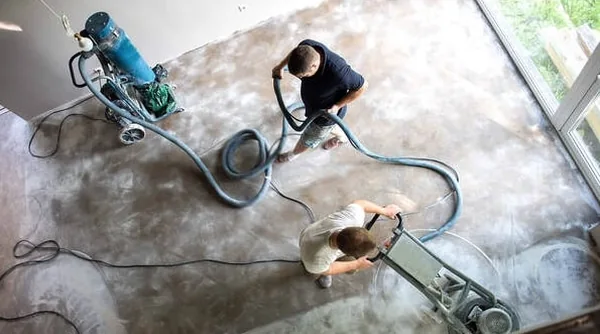
Surface Preparation
Every garage floor is diamond ground. The grinder takes off the weak, salt-scaled top layer along with old sealer and paint, so the base coat soaks into open concrete. A lifting old coating comes off at this stage too.

Crack & Joint Repair
Hairline cracks are normal in an older Chicago slab, and they get filled along with chips and salt pitting so the base coat lands on a sound surface. A crack that is still moving is pointed out first, since no coating holds a shifting slab together.

Base Coat, Flake & Topcoat
An epoxy base coat in your color goes on first; the flake is thrown into it at the density you chose (or the metallic or solid color is rolled instead), and a protective topcoat locks everything in, matte, semi-gloss or high-gloss.
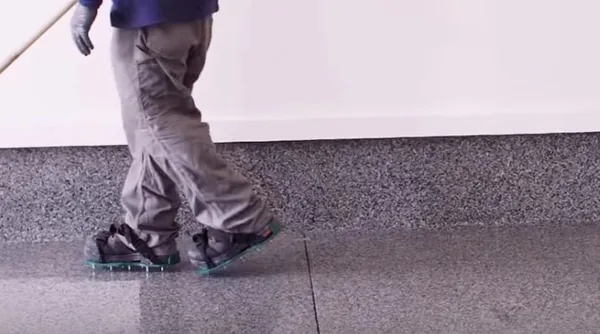
Cure & Walkthrough
Before the crew leaves you walk the finished floor together, get care tips for salt season and hear when it is ready for feet and then for the car, which depends on the product and the slab temperature.

Ready to Start? Step 1 Is Free.
Book a free, no-obligation visit and talk through finishes for your own space.
Pick a Look, Then a Sheen
Flake, metallic or a solid color, finished in matte, semi-gloss or high-gloss.
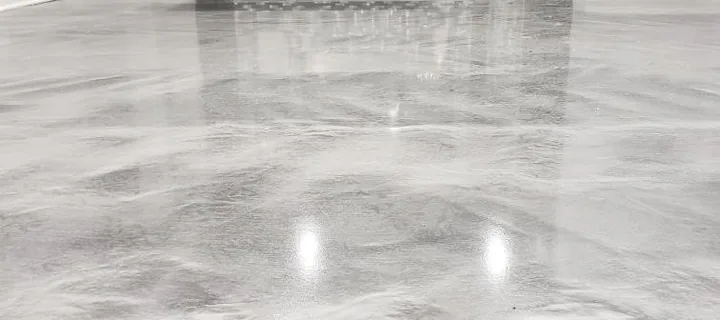

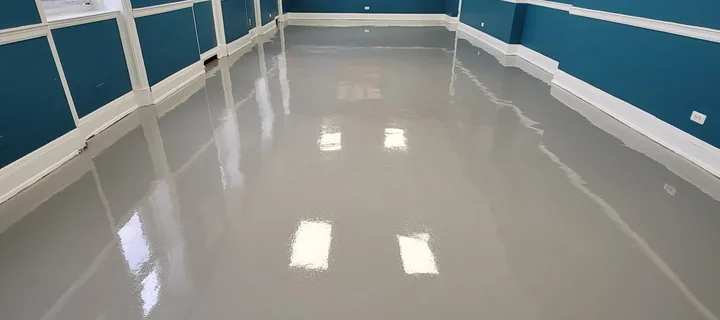


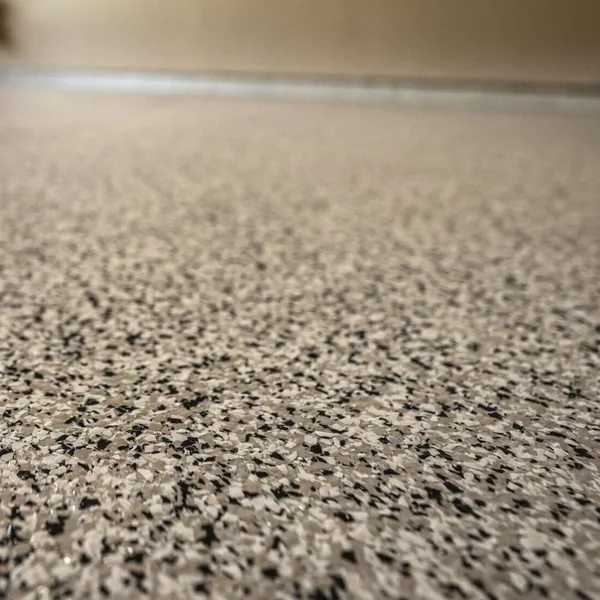
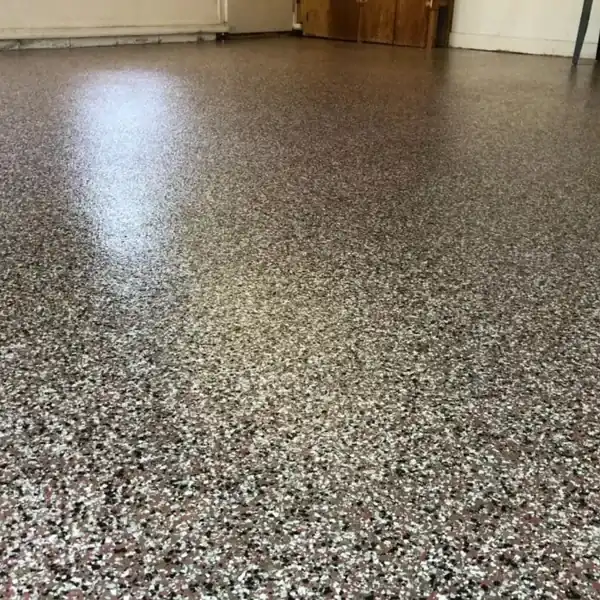
Epoxy Garage Floor Looks
Two looks for flake, the usual garage pick. Bring photos of floors you like to the free estimate.
Garage Floor Epoxy Questions
Answers for Chicago and suburban homeowners planning a garage floor.
No two garages price the same. A 2-car garage runs roughly 400 to 500 square feet, but what the slab has been through (salt scaling, cracks, old paint), the finish and sheen you pick and the grinding and repair it takes all push the figure up or down. The installer measures it in person and hands you a free quote with nothing owed. Call (773) 938-3823, or read our Chicago cost guide for what sets the price.
Yes, with some planning. Every product has a temperature window, and when January's normal high at O'Hare is 31.6°F an unheated garage slab can run well colder than the air above it, so conditions get checked and the dates set around them. Summer brings its own wrinkle: July mornings with dew points in the low 60s call for a moisture reading on the slab before any coating goes on. Book in early fall and the floor is sealed ahead of the first freeze, which lands around the end of October most years.
There is no single number: prep, the system and how hard the garage works all set it. Hosing the salt film off through the winter does more for it than anything. When the apron finally wears through the topcoat, a new topcoat usually goes over it rather than a new floor, and your own slab gets a straight answer at the estimate.
That depends on the product and how cold the slab is, so the crew gives you the times for your own floor at the walkthrough. Most garage floors are done in one to two days.
Never over it. Paint, sealer or a failed epoxy is diamond ground away first, so the new system grips bare concrete and nothing else. Whatever is sitting on your floor gets a look during the free visit and its removal goes into the quote. Floors another contractor got wrong come through here regularly.
Design your garage floor.
Try finishes on a floor like yours and get a ballpark figure with your free-estimate request.
Open Floor Studio →