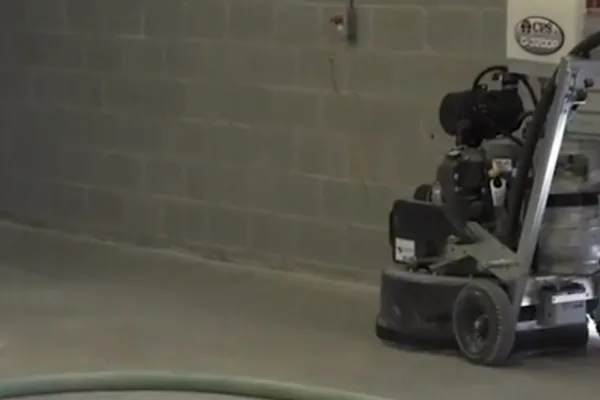
Chicago asks two different things of a garage floor. From late October to mid-April it is freezing nights, snow, and a steady supply of road salt riding in on the car. In July it is hot tires, humid mornings and sun through an open door. Here is how each part of the year works on a coated floor, and what decides whether the floor shrugs it off or starts to let go.
What Decides How Long a Floor Lasts
People ask for a number of years, and we don’t give one. The same product can look sharp after many winters in one garage and start lifting after two in the garage next door, and the brand on the bucket rarely explains the difference. Four things usually do:
- The prep: whether the slab was ground and repaired before it was coated
- The slab: whether water or vapor was moving up through it
- The topcoat: whether it is up to sun through an open door, hot tires, salty slush and spills
- The upkeep: how the floor is cleaned and how fast chips get fixed
Chicago’s weather adds nothing new to that list. It just tests each item harder, in both seasons.
What O’Hare’s Weather Record Shows
The table uses NOAA’s 1991–2020 climate normals for O’Hare International Airport, Chicago’s official weather station since 1980.
| Measure | Normal at O’Hare |
|---|---|
| Nights at or below 32°F | about 121 a year |
| Days when the high never tops 32°F | about 43 a year |
| Snowfall | 38.4 inches a year, 29.6 of them in December–February |
| Median first and last freeze | October 28 and April 16 |
| January normal high and low | 31.6°F and 18.8°F |
| Days at 90°F or hotter | about 17 a year |
| July normal high | 84.5°F |
| July dew point | low 60s°F, morning and afternoon |
Two patterns matter for a floor. First, January’s normal high is below freezing, yet most freezing nights across the season are followed by an afternoon thaw, so meltwater on bare concrete freezes and thaws again and again between late October and mid-April, and March, the slush-and-refreeze month, is when the damage shows. Second, summer is shorter but humid, with dew points in the 60s on the mornings a floor would be installed.
Summer: Heat, Humidity and Sun
Summer gets less attention than winter, but a garage floor feels it in its own way.
Hot tires
Come home down the Kennedy or the Tri-State on one of the 17 or so afternoons a year when O’Hare reaches 90°F and the tires are hot and soft. On a coating that was rolled on thin or never bonded properly, warm rubber can grip the surface as it cools and pull it up, leaving tread-shaped marks or bare patches. It is a classic failure on floors that skipped the grinder, which is one reason every garage floor is diamond ground first. Even on a sound floor, hot rubber can leave marks, so clean them as they appear.
Sun through the door
Plain epoxy with no topcoat can yellow in strong light, and a garage door left open on a long July evening lets plenty of it onto the floor. Flake floors are finished with a protective clear topcoat for that reason, and it is the layer that takes the sun, the tires and the spills.
Humid mornings
July mornings at O’Hare run a dew point in the low 60s, and August is much the same. That matters more on installation day than for the finished floor: a slab can be cooler than the damp air around it, so the installer checks the concrete and the air before mixing anything and works to the product’s own limits rather than a rule of thumb. None of this is exotic, but it is why application skill matters as much as the product name.
Winter: Snow, Salt and Freeze–Thaw
The winter problem is simple: each melt and refreeze lets water into bare concrete, where it expands as it turns to ice.
Then there is what keeps the roads open. Chicago has reported spreading an average of about 215,000 tons of road salt a year on city streets, and IDOT spread about 374,000 tons more on Illinois highways in the 2024–25 winter. The National Ready Mixed Concrete Association puts the mechanism plainly: scaling is the flaking of a concrete surface under freezing and thawing, and de-icing chemicals make it worse by raising the saturation of the surface and the number of freeze–thaw cycles it goes through. Whatever the tires pick up on the Kennedy ends up dripping onto the garage floor.
On a properly bonded coating the slush stays on top, where a squeegee or hose sends it out the door; bare concrete absorbs it. A coating is not a cure for everything, though. Concrete that is already scaling gets ground and repaired before any coating, and the first few feet inside the door will always take the hardest use. That strip has a guide of its own: why floors peel at the garage door.
Winter has one more local habit. On about 43 days a year the temperature never climbs above freezing, and garage doors stay shut through those stretches, so slush melting off the car sits on the floor until someone moves it. A quick pass with a squeegee keeps it from drying into a white salt film. On any winter install, the space is ventilated as the product instructions require.
Planning a Floor Before the First Freeze?
Book a free on-site estimate: the slab gets looked at, you get a straight answer on which finish suits the garage or basement, and a firm price with no obligation.
Under the Coating: Bungalows, Suburbs and Lake-Bed Clay
A coating can be no stronger than the concrete beneath it, and the Chicago area’s housing runs the whole range. The city’s median home dates from 1953, and nearly four in ten were built before 1940: brick bungalows and two-flats over full basements, with a detached garage off the alley. Addison’s and Arlington Heights’ median homes date from the early 1970s, Schaumburg’s from 1979 and Naperville’s from 1990 (Census ACS 2020–2024). An older slab may be perfectly solid, yet it has had decades to soak up oil and collect paint, sealer and cracks, all of which must come off or be fixed before coating. Newer slabs are cleaner but may carry a builder’s sealer or curing compound that has to be ground away.
Moisture is the other half. Chicago is built on the flat bed of a glacial lake, on dense clay that holds water, and most of the area’s sewers carry stormwater and sewage in the same pipes, so heavy summer rain backs up into basements; the July 2023 storms brought more than 12,000 basement-flooding reports to 311 in two weeks. Basements and slabs where water collects are the ones most likely to push moisture into a coating, so the slab is checked before it is coated. Coating a basement does not make it watertight; incoming water needs a fix at its source first.
Cracks come in two kinds. Fine hairlines are normal in concrete and are filled during prep. A live crack, one that is still opening or shifting, is a different problem: no coating can hold a moving slab together, and if the installer sees movement you will hear about it before any work starts.
Habits and Shortcuts That Cut a Floor’s Life
- Skipping the grinder. Smooth, dusty or oily concrete gives a coating nothing to hold. Diamond grinding opens the surface so the base coat soaks in and bonds.
- An unchecked slab. Moisture that was never tested shows up months later as blisters or lifting.
- Chips left open all winter. Salty meltwater works under the edge, freezes, and pries it up a little more with each refreeze.
- Store-bought kits. One thin coat over a washed slab looks fine for a while, then wears through or peels by the door.
- The wrong cleaning habits. Acidic cleaners, abrasive pads and dragged steel wear any finish faster.
A Chicago Care Calendar
- Late October, before the first freeze: clear out leaves and grit, hang a squeegee beside the door, and have any chips fixed while the weather is still mild.
- Winter: squeegee meltwater out after each storm, and rinse the door strip whenever salt dries to a white haze.
- March and April: once the refreezes stop, wash the whole floor with a pH-neutral cleaner so no salt residue or grit is left behind.
- Summer: sweep more often with the door open, wipe up oil drips promptly, and clean tire marks as they appear.
The floor care guide has the full routine; the Chicago cost guide explains what goes into the price of a new floor.
Frequently Asked Questions
How many years will an epoxy floor last in Chicago?
How long it lasts depends on the prep underneath it, the moisture in the slab, the topcoat and the care it gets: a floor that was diamond ground, checked for moisture and finished with a protective topcoat will outlive a thin kit rolled onto a washed slab. We tell you what we see on your slab at the estimate.
Can an epoxy floor handle Chicago winters?
Yes, as a full system on a properly prepared slab. A sound coating keeps salty slush on the surface, where a squeegee or a hose moves it out the door. Trouble starts where a chip or a weak edge lets meltwater underneath, usually just inside the garage door.
Will road salt hurt a coated floor?
On a sound, well-bonded floor, salt and de-icer residue sit on top and rinse off. They do their damage to bare concrete, such as the apron outside the door, and to coatings that are already chipped or poorly bonded. Rinsing the door strip through the winter helps.
Does summer sun affect a garage floor?
It can. Epoxy left without a topcoat can yellow in strong light, and a garage door that stands open on long July evenings lets plenty in. Flake floors are finished with a protective clear topcoat for that reason.
Will a coating hold a cracked slab together?
No. Prep fills hairline cracks, but a slab that is still moving will crack through any coating. Signs of movement are raised with you before the job begins.
Does a floor coating keep basement moisture out?
No. Coating a basement floor does not make it watertight. The slab gets a moisture check first, and sewer backup or seepage has to be fixed where it starts.