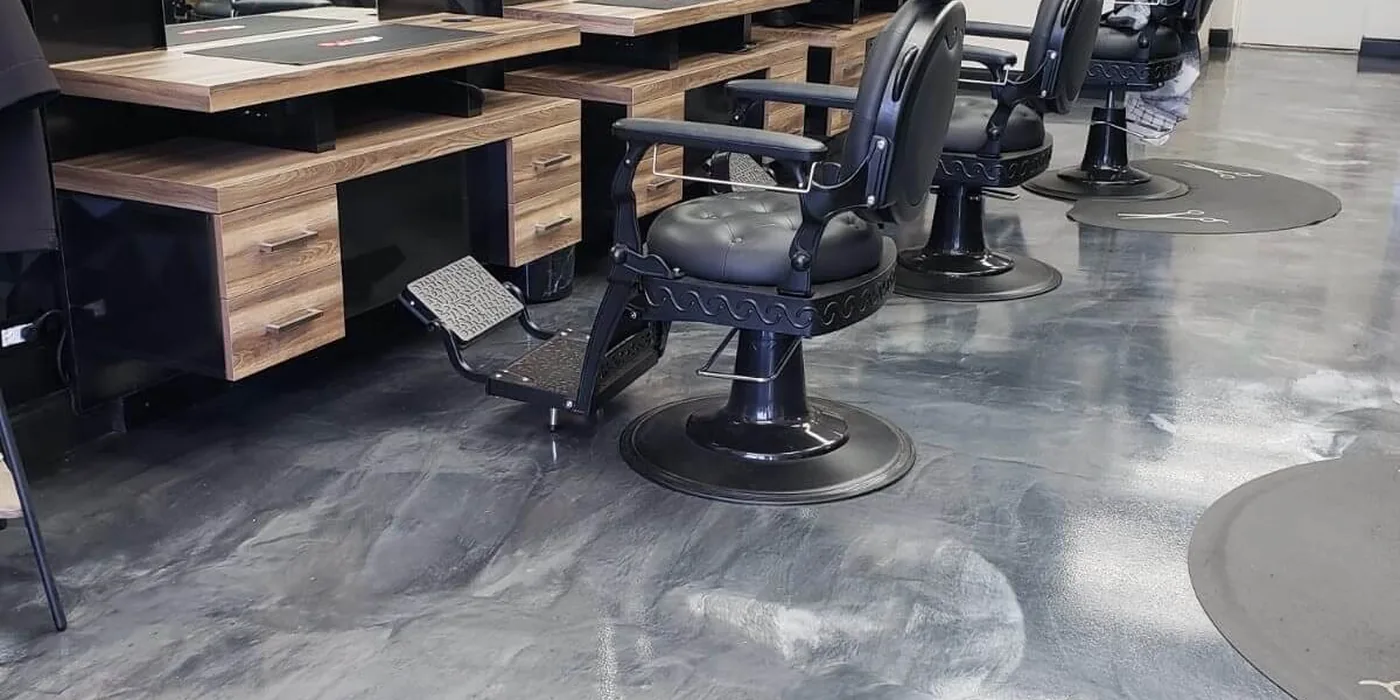
A business floor in Chicago is judged by the people who walk across it and by whoever mops it at closing. Epoxy Floor Chicago coats concrete for warehouses, shops and showrooms, offices, service bays and restaurants across the city and the suburbs, from the Bungalow Belt to Arlington Heights in the northwest and Naperville out west. Every commercial floor gets its own quote after a free site visit, because a dock apron and a barber shop have little in common beyond the concrete.
Below you'll find which finish suits which kind of space, how road salt and a humid Chicago summer show up on a commercial slab, how the work is fitted around your hours, and what shapes the number on the estimate. To talk it through now, call (773) 938-3823.
The Businesses We Coat
Carlos and his crew coat commercial and industrial concrete alongside homes, and the business floors fall into a few groups: warehouses and storage buildings, shops and showrooms, service bays, restaurants and food-service rooms, and offices. A barber shop, a studio and a retail floor are all in the review history. Whatever the room, the first questions are the same. What rolls across the floor? What gets spilled on it? How is it cleaned, and how long can the room be out of use?
Most of our Google reviews come from homeowners, but the business owners among them talk about the same things you would:
“The team was quick and efficient in completing my epoxy flooring installation for my business. The durability of the flooring is impressive, and I'm confident it will hold up for years to come.”
— Leonard G., Google review
Warehouses, Docks and Intermodal Yards
Metro Chicago carries about a quarter of the country's freight trains and half of its intermodal trains, and the region holds roughly 1.1 billion square feet of industrial space, so a great deal of concrete here lives under pallet jacks and forklifts. Bare warehouse concrete sheds dust, drinks up whatever leaks off a pallet and wears a groove wherever a forklift turns. A coating gives the slab a hard, sealed surface: it sweeps clean, spills stay on top until they're wiped up, and a light color makes a tall, dim building feel brighter. Safety striping, forklift lanes, walkways and keep-clear zones can be laid into the floor as part of the same job instead of taped down later.
Prep decides how long any of that lasts. Old sealers, curing compounds, tire rubber and failed coatings come off first by grinding, cracks and spalls get filled, and the slab is checked for moisture before anything goes down. Dock aprons and the first bay inside an overhead door, where salt slush drips off trucks all winter, get the hardest-wearing build. Heavier production floors are covered on our industrial epoxy flooring page.
Shops, Showrooms and Offices
Customers notice the floor before they notice what's on it, and a patched, stained slab speaks for a business even when nobody says a word. Three finishes do well in public rooms. Metallic epoxy gives a showroom the depth of polished stone. Flake looks neat and hides everyday scuffs. Solid color keeps eyes on the merchandise. The topcoat can be matte, semi-gloss or high gloss to suit the lighting.
Offices ask less of a floor in wear and more in looks and upkeep: rolling chairs, a nightly vacuum, coffee on the way to a desk. Solid color or flake is the usual answer. In a store the harder question is timing. An opening date rarely moves and an open shop can't give up many trading days, which is why scheduling comes up under working around your hours, below.
Restaurants and Food-Service Floors
Food-service floors in Illinois have to be smooth and easily cleanable, with coved junctures where the floor meets the wall, under the FDA Food Code the state has adopted. A seamless coated floor fits the first half of that description well: there are no grout lines to trap grease and the surface wipes down with the rest of the room. Back of house takes hot water, fryer grease, food acids and a mop several times a shift, so the kitchen gets a solid-color system with a textured, slip-resistant surface; the dining room and the counter can carry something more decorative, since they see shoes rather than boiling water.
Grip matters most behind the line and at the dish station, less in a dining room where chairs slide, so the amount of texture is set room by room. If your inspector or landlord has specific requirements for floor finishes, bring them to the site visit so the quote is written around them, and ask us which system fits the hardest-working rooms in your kitchen.
Service Bays and Auto Shops
Service bays collect motor oil, coolant, brake fluid and dropped tools. In July, when the normal high at O'Hare is 84.5°F and cars roll in off the Kennedy or the Tri-State, they also take hot tires. A bay needs a chemical- and stain-resistant coating laid over a slab that has been ground clean of years of oil. Flake hides the wear of a working shop; solid color makes a dropped bolt easy to find. A waiting room or sales floor next door can take a more decorative finish, so one building often ends up with two systems.
A word on hot tires: warm rubber can soften and lift a thin or poorly bonded coating, and nobody can honestly promise that a tire fresh off the expressway will never leave a mark. What helps is thorough prep, a tough topcoat and wiping up fluids before they sit.
Finishes at a Glance
Use this as a starting point. The exact build is settled at the site visit, once the slab and the way the room is used have been seen in person.
| Space | What the floor takes | Usual build | Finish options |
|---|---|---|---|
| Warehouse / dock | Forklifts, pallet jacks, dust, drips | Epoxy base and hard topcoat over a ground slab | Solid color, striping and marked lanes |
| Shop / showroom | Shoes, carts, first impressions | Metallic or flake under a clear topcoat | Metallic, flake or solid; matte to high-gloss |
| Restaurant / kitchen | Hot water, grease, wet mopping every shift | Solid-color system with a textured topcoat | Textured, slip-resistant surface |
| Service bay | Oil, coolant, hot tires, dropped tools | Chemical-resistant epoxy and topcoat | Flake or solid color |
| Office | Rolling chairs, nightly vacuum, looks | Epoxy system with a clear topcoat | Solid color or flake |
Try finishes on a floor like yours and get a ballpark figure with your free-estimate request.
Open Floor Studio →Chicago Winters and a Business Floor
Salt at the dock and the door
Chicago's Streets and Sanitation crews have reported spreading an average of about 215,000 tons of road salt a year, and IDOT spread 373,639 tons on Illinois highways in the 2024–25 winter. The ready-mixed concrete industry's NRMCA explains why that matters for bare concrete: de-icers raise the saturation of the surface and increase the freezing and thawing it goes through, which is what scales and pits a slab. For a business, the entry, the dock apron and the first bay inside an overhead door take the worst of it from late October to April. Those are the spots that get the toughest build, and where walk-off mats and a squeegee earn their keep.
Freezing nights, humid summers
O'Hare drops to freezing on about 121 nights a year, and on about 43 of them the high never gets above 32°F. January's normal high is 31.6°F, so an unheated dock or bay keeps a cold slab well into the day. Summer is the opposite problem: about 17 days reach 90°F and July dew points sit in the low 60s, so mornings are humid. Neither suits a rushed install. The crew reads the slab, not the calendar, and follows each product's own instructions on when it can go down.
Rain, floor drains and moisture
Chicago averages close to 38 inches of rain a year, and on July 2, 2023 O'Hare recorded 3.35 inches in a single day. In the two weeks that followed, Chicagoans filed more than 12,000 basement-flooding reports with 311. A commercial slab at or below grade can carry that moisture up through the concrete, which is why the slab is checked before coating and why drainage problems are fixed first. A coating is a wear surface, not a fix for water coming in.
Working Around Your Hours
For most businesses the coating itself isn't the hard part. The days the room is out of use are, so the schedule is settled before anything else:
- Name your window. Tell us which days the space can stand empty, and the estimate will say plainly whether the floor you need fits inside them.
- Ask about phasing. A larger floor can sometimes be coated one zone at a time while the rest of the building keeps running. Whether that works depends on the layout, and it's decided at the site visit.
- Know the return-to-service times. When the floor can take shoes, carts and vehicles depends on the product and the conditions that day, so you get the times for your floor rather than a generic promise.
- Empty the room. Who moves racking, shelving and stock is agreed beforehand, so the crew doesn't arrive to a room that isn't ready.
Planning a Commercial Floor in Chicago?
Tell us about the space and the hours you can give up. The quote is measured in person after a free site visit, with no obligation.
What Shapes a Commercial Quote
Commercial and industrial floors are quoted one project at a time, after the installer has stood on the slab. A quiet office and a restaurant kitchen are too far apart for one figure to mean anything. What moves the quote:
- Square footage and layout. One open bay goes faster than a string of small rooms cut up by drains, columns and doorways.
- Slab condition. Old coatings, sealers, soaked-in oil, cracks and scaled concrete all add prep.
- Finish. Flake, metallic and solid color are different materials with different labor.
- Add-ons. Slip-resistant texture, safety striping and marked lanes.
- Hours and access. Night work or phased zones take more planning than an empty building.
The estimate is free, on site and carries no obligation. Homeowners can read our Chicago epoxy flooring cost guide for what sets the price of a garage or basement floor, and the commercial epoxy flooring page covers the finishes in more detail.
Questions Business Owners Ask
What does commercial epoxy flooring cost in Chicago?
Each commercial floor is quoted on its own after a free site visit. Square footage, layout, the condition of the slab, the finish and the hours you can give up all move the number, so we don't publish a per-square-foot figure.
Can the floor be done without closing the business?
Often, in part. A larger floor may be coated one zone at a time while the rest stays open, and a small room can be booked for your quietest days. The return-to-service times for your floor are confirmed at the site visit.
What kind of floor does a restaurant kitchen need?
One that is smooth, easily cleanable and coved where it meets the wall, which is what the FDA Food Code adopted in Illinois asks of food-service floors. A seamless solid-color system with a textured, slip-resistant surface fits that brief; ask us which build suits the wettest rooms in your kitchen.
Is a commercial epoxy floor slippery?
A glossy finish can be slick when wet. Slip-resistant additives go into the topcoat, and the amount of texture is matched to the room, so a kitchen or an entry gets more grip than an office.
What goes on a warehouse floor?
Usually an epoxy base and a hard topcoat over a ground slab, with safety striping and marked lanes if you want them. The exact build is confirmed once the concrete has been checked.
Do you coat auto shops and service bays?
Yes. A bay takes a chemical- and stain-resistant coating over a slab ground clean of old oil. Flake and solid color both work there, and a waiting room or sales floor next door can take a more decorative finish.
Related Articles
Epoxy Flooring Cost in Chicago: What Sets Your Price (2026)
Size, slab condition, finish and access: what moves a Chicago garage or basement quote.
How Chicago’s Snow, Salt and Sun Test an Epoxy Floor
About 121 freezing nights, road salt and humid summers: how Chicago weather shows up on a coated floor.